X
Our staff will contact you within 12 hours, You can also contact us through the following ways:
Contact US WhatsApp: +86 18263873187
- Email: [email protected]
- Tel: +86 18263873187
- Web: www.lifting-chain.com


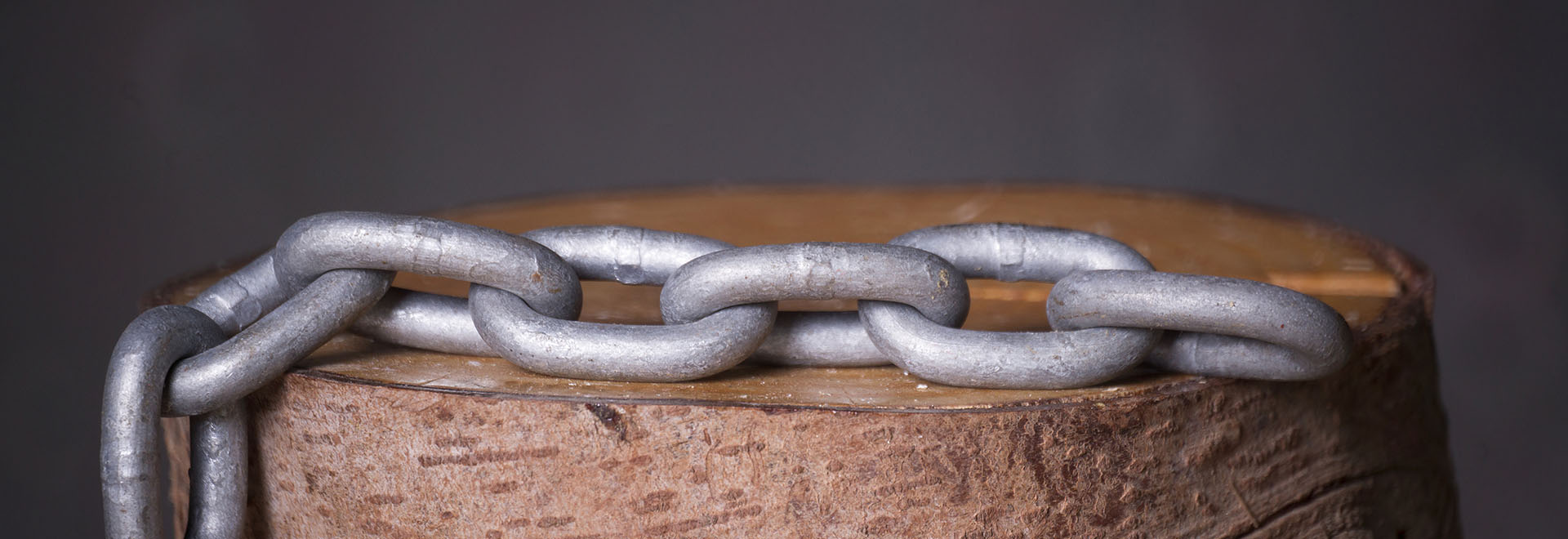
How to Measure Lifting Chain: Complete Guide for Safe and Accurate Sizing
Selecting the wrong lifting chain size can cost you thousands in equipment damage, downtime, or worse—create a safety hazard. Yet most people guess at chain measurements instead of following industry standards. This guide walks you through every method to measure lifting chain accurately, from bearing point calculations to pitch formulas, so you order the exact size you need the first time.
Whether you're replacing a worn chain sling, sizing equipment for a new project, or ensuring compliance with OSHA standards, understanding how to measure lifting chain is non-negotiable. We'll cover the tools, techniques, and common pitfalls that separate professionals from amateurs.
Understanding Lifting Chain Basics
Before measuring, you need to know what you're measuring. Lifting chains come in different types, each with distinct characteristics that affect how you take measurements.
Types of Lifting Chains
Alloy Steel Chains are the industry standard for overhead lifting. They're graded by strength—Grade 80, Grade 100, and Grade 120 are the only acceptable grades for overhead lifting applications. Grade 70 and below are transport chains, never suitable for lifting. Alloy steel chains offer superior durability and can handle extreme loads, making them the choice for demanding industrial environments.
Leaf Chains (also called roller chains) are commonly used in forklifts, tractors, and small earth-moving equipment. These chains feature a different link structure than alloy chains and require a specific measurement formula. Leaf chains are designed for high-load applications where power transmission and lifting are critical.
Stainless Steel Chains (Grade 63) are required in food-grade and chemical applications where corrosion resistance matters. While less common than alloy steel, they follow similar measurement principles with special handling considerations.
Key Terminology
Understanding chain terminology is essential before you start measuring. The pitch is the distance between the centers of consecutive pins—typically measured in millimeters or inches. This is one of the most critical measurements you'll take.
The bearing point is where the chain actually supports the load. For hooks, this is the top of the hook's bowl; for master links, it's the point where the legs attach. Measuring from bearing point to bearing point—not from the end of the hook—is where most people make their first mistake.
A master link (also called a collector ring or oblong link) is used on multi-leg slings to attach multiple chain legs together. Single-leg slings have a hook at one end; multi-leg slings have a master link at the top where all legs converge.
Method 1: Measuring Single-Leg Chain Slings
Single-leg lifting chains are the simplest to measure. These slings have a hook or master link at one end and a grab hook at the other, making them ideal for straightforward vertical lifts.
Step-by-Step Measurement Process
Step 1: Locate the Bearing Points
Start by identifying the bearing point on each end of your chain. For a hook, the bearing point is at the top of the hook's bowl—where the chain actually sits when under load. Don't measure from the tip of the hook or the bottom; always use the bearing point.
Place your measuring tape at the bearing point of the upper hook. This is your starting reference.
Step 2: Measure to the Lower Bearing Point
Extend your measuring tape down to the bearing point of the lower hook (typically a grab hook). This is your total chain length. Record this measurement in both inches and millimeters for accuracy.
Step 3: Account for Hardware
The measurement you just took includes the hardware (hooks). If you're ordering a replacement chain, you need to know whether you want the chain alone or the complete assembly with hooks. Most manufacturers provide both options, so clarify this with your supplier.
Step 4: Verify with the Pitch Formula
To double-check your measurement, count the outer link plates (the visible metal plates on the sides of the chain). Use this formula:
Chain Length (mm) = (((# of outer plates × 2) + 1) × pitch) ÷ 1000
For example, if you count 40 outer plates and your chain has a 10mm pitch:
• (((40 × 2) + 1) × 10) ÷ 1000 = 8.1 meters
This verification step catches measurement errors before you place an order.
Method 2: Measuring Multi-Leg Chain Slings
Multi-leg slings (double-leg, triple-leg, or quad-leg) are more complex because each leg must be measured separately, and they all converge at a master link.
Measuring Double-Leg Slings
For a double-leg sling, you have two chain legs attached to a single master link at the top. Each leg must be measured individually because they may not be identical lengths.
Step 1: Identify the Master Link
The master link is the oblong ring at the top where both legs attach. The bearing point on the master link is where the legs connect—not the outer edge of the link itself.
Step 2: Measure Each Leg Separately
Measure from the bearing point on the master link down to the bearing point of the hook on the first leg. Record this measurement. Repeat for the second leg.
Step 3: Check for Symmetry
Both legs should be approximately the same length. If they differ by more than 1-2%, there's likely a measurement error or the sling was improperly assembled. Unequal legs create uneven load distribution and increase safety risks.
Step 4: Account for Adjusters
Some multi-leg slings include adjusters (grab hooks or shorteners) positioned near the master link. These allow you to shorten individual legs to balance uneven loads. When measuring, note whether adjusters are present and their position, as this affects the effective working length.
Method 3: Using the Pitch Formula for Precision
The pitch formula is the most accurate method for determining chain length, especially when you can't physically measure the chain or need to verify a measurement.
Understanding Chain Pitch
Chain pitch is the distance between the centers of consecutive pins. Common pitches include 6.35mm (1/4"), 9.525mm (3/8"), 12.7mm (1/2"), and 15.875mm (5/8"). Your chain's pitch is usually stamped on the chain itself or documented in the manufacturer's specifications.
The Calculation Process
The formula works by counting the outer link plates and applying the pitch:
Chain Length = (((Outer Plates × 2) + 1) × Pitch) ÷ 1000
Step 1: Count Outer Link Plates
Lay the chain flat on a clean surface. Count only the outer plates (the metal plates visible on the sides of the chain). Count from one end to the other. Mark every 10th plate to avoid miscounting on long chains.
Step 2: Identify the Pitch
Look for the pitch specification on the chain itself. If it's not visible, consult the manufacturer's documentation or contact your supplier. Pitch is always measured in millimeters or inches.
Step 3: Apply the Formula
Multiply the number of outer plates by 2, add 1, then multiply by the pitch. Divide by 1000 to convert millimeters to meters.
Example Calculation:
• Outer plates: 50
• Pitch: 10mm
• Calculation: (((50 × 2) + 1) × 10) ÷ 1000 = 10.1 meters
When to Use This Method
Use the pitch formula when you're ordering replacement chains and need exact specifications, when physical measurement is impractical, or when verifying a measurement taken with a tape measure. This method is particularly valuable for chains that are coiled or difficult to lay flat.
Measuring Chain Diameter and Grade
Beyond length, you need to know your chain's diameter and grade—both critical for ensuring the correct working load limit.
Measuring Chain Diameter
Chain diameter refers to the thickness of the chain links themselves. This is measured across the widest point of the chain link.
Using Calipers for Accuracy
Digital calipers provide the most accurate diameter measurement. Place the calipers across the widest part of a link (not at the pin). Take multiple measurements from different links and average them. Common diameters include 3/8", 1/2", 5/8", and 3/4".
Comparing to Standards
Once you have your measurement, compare it to standard chain sizes. A 3/8" chain should measure approximately 9.5mm; a 1/2" chain should measure approximately 12.7mm. If your measurement doesn't match a standard size, you may have an unusual or specialty chain.
Identifying Chain Grade
Chain grade indicates the strength and working load limit. The grade is typically stamped directly on the chain links.
Grade 80 is the minimum acceptable grade for overhead lifting. It's the most common and affordable option for general-purpose lifting.
Grade 100 offers higher strength than Grade 80, allowing for higher working load limits with the same diameter. It's preferred in demanding industrial applications.
Grade 120 provides maximum strength but is rarely manufactured and difficult to source. It's typically reserved for specialized applications.
Grade 63 (Stainless Steel) is required for food and chemical applications but should never be used for general lifting due to its lower strength.
If you can't find the grade marking, contact the chain manufacturer or your supplier. Using an unmarked or incorrectly identified chain is a serious safety violation.
Common Measurement Mistakes and How to Avoid Them
Even experienced riggers make measurement errors. Here are the most common mistakes and how to prevent them.
Mistake 1: Measuring from the Hook Tip Instead of the Bearing Point
The Problem: Many people measure from the very tip of the hook to the tip of the lower hook. This adds extra length that shouldn't be included in the chain measurement.
The Solution: Always measure from the bearing point—the top of the hook's bowl where the chain actually sits under load. The bearing point is typically 1-2 inches below the hook tip, so this mistake can add significant error to your order.
Mistake 2: Forgetting to Account for Hardware
The Problem: When you order a replacement chain, you need to specify whether you want the chain alone or the complete assembly with hooks. Ordering the wrong option means either having loose hardware or receiving a chain that's too short for your application.
The Solution: Before ordering, clarify with your supplier: "Do you want the chain length including hooks, or just the chain itself?" Document this in your order to prevent confusion.
Mistake 3: Miscounting Outer Plates
The Problem: When using the pitch formula, miscounting outer plates by even a few links can result in a chain that's significantly off in length. A single miscounted link represents 10-15mm of error.
The Solution: Count slowly and deliberately. Mark every 10th plate with a pen or tape to create checkpoints. Count from both ends and verify your total matches. If you're measuring a coiled chain, uncoil it completely before counting.
Mistake 4: Ignoring Adjusters and Shorteners
The Problem: Multi-leg slings often include adjusters (grab hooks) positioned near the master link. If you don't account for these, your measurement will be inaccurate.
The Solution: Identify all adjusters before measuring. Measure from the master link bearing point to the lower hook bearing point, accounting for any shorteners in between. Document the adjuster positions in your notes.
Mistake 5: Measuring Stretched or Worn Chains
The Problem: Chains stretch over time under load. A worn chain may measure 1-3% longer than its original specification, leading to incorrect replacement sizing.
The Solution: Always measure new, unstretched chain as your reference. If you're replacing a worn chain, consult the original specifications rather than measuring the worn chain itself. If original specs aren't available, contact the manufacturer with the chain's grade and diameter to determine the correct length.
Safety and Compliance Standards
Measuring lifting chain isn't just about getting the right size—it's about ensuring safety and meeting regulatory requirements.
Working Load Limit (WLL)
The Working Load Limit is the maximum safe load a chain can handle. WLL depends on three factors: chain diameter, chain grade, and the number of legs (for multi-leg slings).
Single-Leg Slings use the full strength of the chain. A 1/2" Grade 80 chain has a WLL of approximately 9,400 lbs.
Multi-Leg Slings distribute the load across multiple legs. A 2-leg sling with the same 1/2" Grade 80 chain has a WLL of approximately 18,800 lbs (double the single-leg capacity).
Angle Considerations reduce WLL significantly. Slings used at angles less than 90 degrees to the load have reduced capacity. A sling at 45 degrees has only 71% of its vertical capacity. Never use slings at angles less than 30 degrees.
OSHA and ASME Standards
OSHA (Occupational Safety and Health Administration) requires that all lifting chains meet ASME (American Society of Mechanical Engineers) standards. These standards specify:
• Minimum chain grades for overhead lifting (Grade 80 and above)
• Inspection intervals and procedures
• Marking and identification requirements
• Load rating documentation
Your lifting chains must be marked with the grade, size, and working load limit. If a chain lacks these markings, it's not compliant and shouldn't be used for lifting.
Inspection and Maintenance
Regular inspection is part of safe chain use. Before each use, visually inspect your chain for:
• https://www.lifting-chain.com/contact/Cracks or breaks in links
• Excessive wear or stretching
• Corrosion or rust
• Deformation of links or hooks
• Missing or damaged hardware
If you notice any of these issues, remove the chain from service immediately. A damaged chain can fail suddenly under load, creating a serious safety hazard.
Practical Application: Choosing the Right Lifting Chain
Now that you understand how to measure lifting chain, let's apply this knowledge to real-world scenarios.
Scenario 1: Replacing a Worn Single-Leg Sling
You have a single-leg chain sling that's been in service for several years. The chain shows signs of wear, and you need a replacement.
What to Do:
First, locate the original specifications. Check for markings on the chain showing grade and diameter. If the chain is too worn to read, contact the equipment manufacturer with the equipment model number.
Once you have the specifications (let's say 1/2" Grade 80, 10 feet long), verify this is still appropriate for your application. Has your load weight changed? Do you need the same configuration?
Measure your current chain from bearing point to bearing point to confirm the specification. If it measures 10 feet, order a replacement with the same specifications. If it measures significantly different (more than 1-2%), investigate why before ordering.
When ordering, specify: "1/2" Grade 80 single-leg chain sling, 10 feet, with hooks." This clarity prevents order errors.
Scenario 2: Sizing a Multi-Leg Sling for a New Application
You're lifting a 5,000 lb load that's 8 feet wide, with lifting points at each corner. You need a multi-leg sling.
What to Do:
Calculate the load per leg: 5,000 lbs ÷ 4 legs = 1,250 lbs per leg. Add a safety factor (typically 4:1 for general lifting): 1,250 × 4 = 5,000 lbs WLL required per leg.
Consult a chain capacity chart. A 3/8" Grade 80 chain has a WLL of approximately 4,700 lbs (single leg), which is slightly below your requirement. A 1/2" Grade 80 chain has a WLL of approximately 9,400 lbs, which exceeds your requirement with margin.
Choose the 1/2" Grade 80 chain. Measure the distance from your crane hook to the lifting points on the load. Let's say this distance is 6 feet. Order a 4-leg sling with 6-foot legs.
Specify: "1/2" Grade 80 quad-leg chain sling, 6 feet per leg, with oblong master link and sling hooks."
Tools and Resources for Accurate Measurement
Having the right tools makes measurement easier and more accurate.
Essential Measuring Tools
Steel Measuring Tape is the most basic tool. Use a 25-foot or 50-foot tape with both metric and imperial markings. Avoid cloth tapes, which stretch and give inaccurate readings.
Digital Calipers measure chain diameter precisely. Look for calipers with 0.01" accuracy. They're inexpensive (under $20) and invaluable for identifying chain size.
Chain Pitch Gauge is a specialized tool that identifies pitch by matching the chain to marked slots. If you measure chains frequently, this tool saves time and prevents errors.
Marker or Tape helps you mark counting checkpoints when using the pitch formula. This prevents miscounting on long chains.
Online Resources
Many chain manufacturers provide online sizing calculators and specification charts. Before ordering, consult the manufacturer's resources to verify your measurements and confirm you're ordering the correct grade and size.
Your supplier should also provide technical support. Don't hesitate to call with questions—a few minutes on the phone can prevent an expensive ordering mistake.
When to Consult a Professional
While measuring lifting chain is straightforward, some situations warrant professional consultation.
Complex Multi-Leg Configurations: If you're designing a custom sling with more than four legs, or if legs need to be different lengths, consult a rigging professional. They can ensure proper load distribution and safety.
Unusual Load Shapes: Loads with irregular shapes or multiple lifting points may require specialized sling configurations. A rigging engineer can design the optimal solution.
High-Value or Critical Loads: For expensive equipment or mission-critical applications, having a professional verify your measurements and sling selection provides peace of mind and ensures compliance.
Compliance Questions: If you're unsure whether your lifting setup meets OSHA or ASME standards, consult a certified rigger or safety professional.
Conclusion
Measuring lifting chain accurately is a fundamental skill for anyone involved in rigging, lifting, or material handling. By understanding the different measurement methods, avoiding common mistakes, and following safety standards, you ensure that your lifting operations are both safe and efficient.
The key takeaway is simple: measure from bearing point to bearing point, verify your measurement using the pitch formula, and always consult the manufacturer's specifications and capacity charts before ordering. When in doubt, ask your supplier—they're there to help you get it right.