X
Our staff will contact you within 12 hours, You can also contact us through the following ways:
Contact US WhatsApp: +86 18263873187
- Email: [email protected]
- Tel: +86 18263873187
- Web: www.lifting-chain.com


Introduction: Understanding the Versatility of Chain Slings
Walk into any active construction site, manufacturing facility, or shipyard, and you'll likely see chain slings in action. Yet many people who work around lifting and rigging equipment have only a vague understanding of what chain slings are actually designed for and why they're chosen over other lifting options. This knowledge gap often leads to suboptimal equipment selection, reduced operational efficiency, and sometimes even safety compromises.
Chain slings have earned their place as one of the most versatile and reliable lifting tools in industrial operations worldwide. But their versatility isn't accidental—it's the result of specific design characteristics that make them exceptionally well-suited to particular applications that would challenge or even damage other types of slings. Understanding what chain slings are used for, and more importantly, why they're the right choice for specific scenarios, is essential for anyone involved in lifting and rigging operations.
This comprehensive guide explores the diverse applications of chain slings across multiple industries, explains the specific advantages they provide in each context, and helps you understand when and why chain slings are the optimal choice for your lifting needs. Whether you're managing a construction project, operating a manufacturing facility, or coordinating marine operations, this guide will clarify how chain slings fit into your lifting strategy.
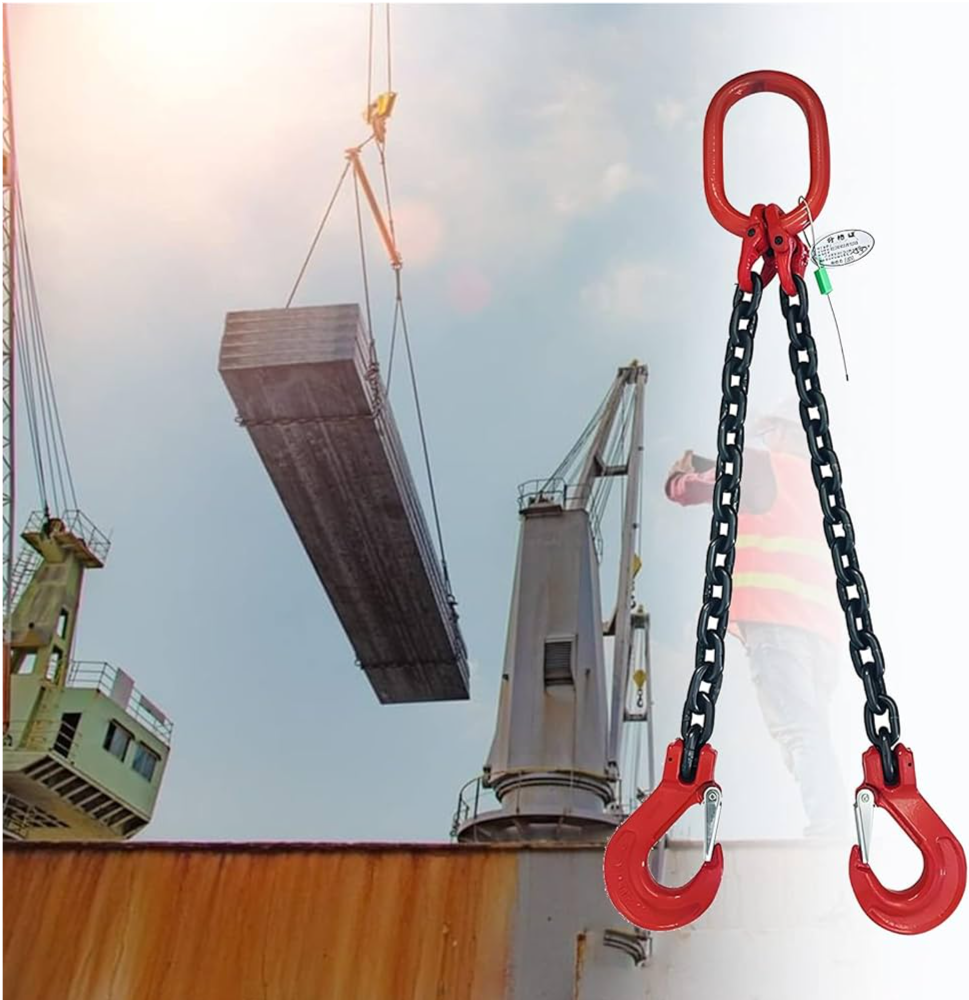
Chain slings are lifting assemblies constructed from high-strength alloy steel chains connected to various hardware components, typically including master links and hook fittings [1]. The fundamental design consists of individual chain links welded or connected together to form a continuous lifting tool capable of supporting enormous loads while maintaining flexibility and durability under demanding conditions.
The core purpose of a chain sling is straightforward: to safely suspend, lift, and move heavy loads in industrial and commercial environments. However, this simple description belies the sophisticated engineering that goes into modern chain slings. Each component—from the individual chain links to the attachment hardware—is precisely designed and tested to meet strict safety standards and perform reliably under conditions that would compromise less robust lifting solutions [2].
Several fundamental characteristics of chain slings directly determine their suitability for specific applications. Understanding these characteristics is essential for recognizing when chain slings are the optimal choice.
Exceptional Strength: Chain slings made from Grade 100 or higher alloy steel offer approximately 25% more strength than standard Grade 80 chains [1]. This strength-to-weight ratio makes them ideal for applications involving extremely heavy loads that other sling types cannot safely handle.
High Temperature Tolerance: Unlike synthetic slings that degrade in heat or wire rope that can lose strength at elevated temperatures, chain slings maintain their structural integrity and working load limits even at temperatures exceeding 400 degrees Fahrenheit [1]. This characteristic makes them uniquely suited to hot material handling applications.
Abrasion and Cut Resistance: The hardened steel construction of chain slings provides exceptional resistance to cuts, abrasions, and contact damage. In environments where loads have sharp edges or rough surfaces, chain slings outperform synthetic alternatives that can be easily damaged.
Flexibility and Conformability: Despite their strength, chain slings remain flexible enough to conform to the shape of loads and navigate around corners and obstacles. This flexibility, combined with their strength, creates a unique combination of capabilities.
Longevity and Repairability: Chain slings can remain in service for decades with proper maintenance and inspection. Individual links can be replaced if damaged, extending the service life of the entire assembly far beyond what's possible with other sling types [3].
The construction industry represents one of the largest users of chain slings, and for good reason. Construction environments present multiple challenges that chain slings are specifically designed to handle. Setting steel beams, positioning heavy machinery, moving concrete elements, and handling rough construction materials all represent ideal applications for chain slings.
In construction, loads are often heavy, irregularly shaped, and may have rough or sharp edges. Steel beams, for example, have sharp corners and edges that would quickly damage synthetic slings but barely affect hardened chain links. Concrete elements may be extremely heavy and require multiple-leg slings to distribute the load safely. Construction sites are also inherently unpredictable—equipment may be used in varying weather conditions, exposed to dust and debris, and subjected to the rough handling that's inevitable on active job sites.
Chain slings excel in these conditions because they can handle the weight, resist the damage from rough contact, and maintain their integrity despite the challenging environment. A single chain sling assembly can often be used for years on a construction site, requiring only periodic inspection and occasional link replacement if damage occurs.
Manufacturing facilities, particularly those involved in metal fabrication, automotive production, and heavy equipment manufacturing, rely extensively on chain slings. These environments present unique challenges: loads are often extremely heavy, may be hot from manufacturing processes, and require precise positioning for assembly or processing.
In steel mills, for example, chain slings are used to move hot ingots, billets, and finished steel products. The heat from these materials would quickly degrade synthetic slings and could even affect wire rope performance. Chain slings, however, maintain full strength even when handling materials at temperatures that would be impossible for other sling types. This heat resistance, combined with their strength, makes chain slings the only practical choice for many hot material handling applications in manufacturing.
Automotive manufacturing facilities use chain slings for moving engine blocks, transmissions, and other heavy components through various manufacturing stages. The repetitive nature of automotive production means slings must be reliable and consistent over thousands of cycles. Chain slings deliver this consistency while resisting the wear and tear of continuous use.
The maritime industry depends heavily on chain slings for loading and unloading cargo, positioning equipment on vessels, and managing heavy marine operations. The marine environment presents particular challenges: saltwater corrosion, exposure to weather, and the need to handle extremely heavy loads in confined spaces aboard ships.
Chain slings with proper corrosion-resistant coatings are ideal for marine applications because they resist saltwater corrosion far better than uncoated alternatives. Their strength allows them to handle the massive weights involved in cargo operations, and their flexibility makes them suitable for the confined spaces and irregular load shapes common in maritime work. A single chain sling can serve a shipping company for years, making them cost-effective despite their higher initial investment compared to some synthetic alternatives.
The oil and gas industry uses chain slings extensively for equipment installation, maintenance operations, and subsea work. These applications often involve extreme conditions: high pressures, corrosive environments, temperature extremes, and the need for absolute reliability where equipment failure could have catastrophic consequences.
Chain slings are chosen for oil and gas applications because of their proven reliability, their resistance to corrosion when properly coated, and their ability to handle the extreme loads involved in offshore operations. Whether moving drilling equipment, positioning production facilities, or handling subsea components, chain slings provide the strength and durability that these critical operations demand.
Even in precision industries like aerospace manufacturing, chain slings play an important role. Aircraft components, jet engines, and other aerospace equipment are often extremely heavy and require careful handling with equipment that won't damage precision surfaces. Chain slings, when used with appropriate load distribution and protective measures, provide the strength needed for these applications while allowing for the control and precision that aerospace operations require.
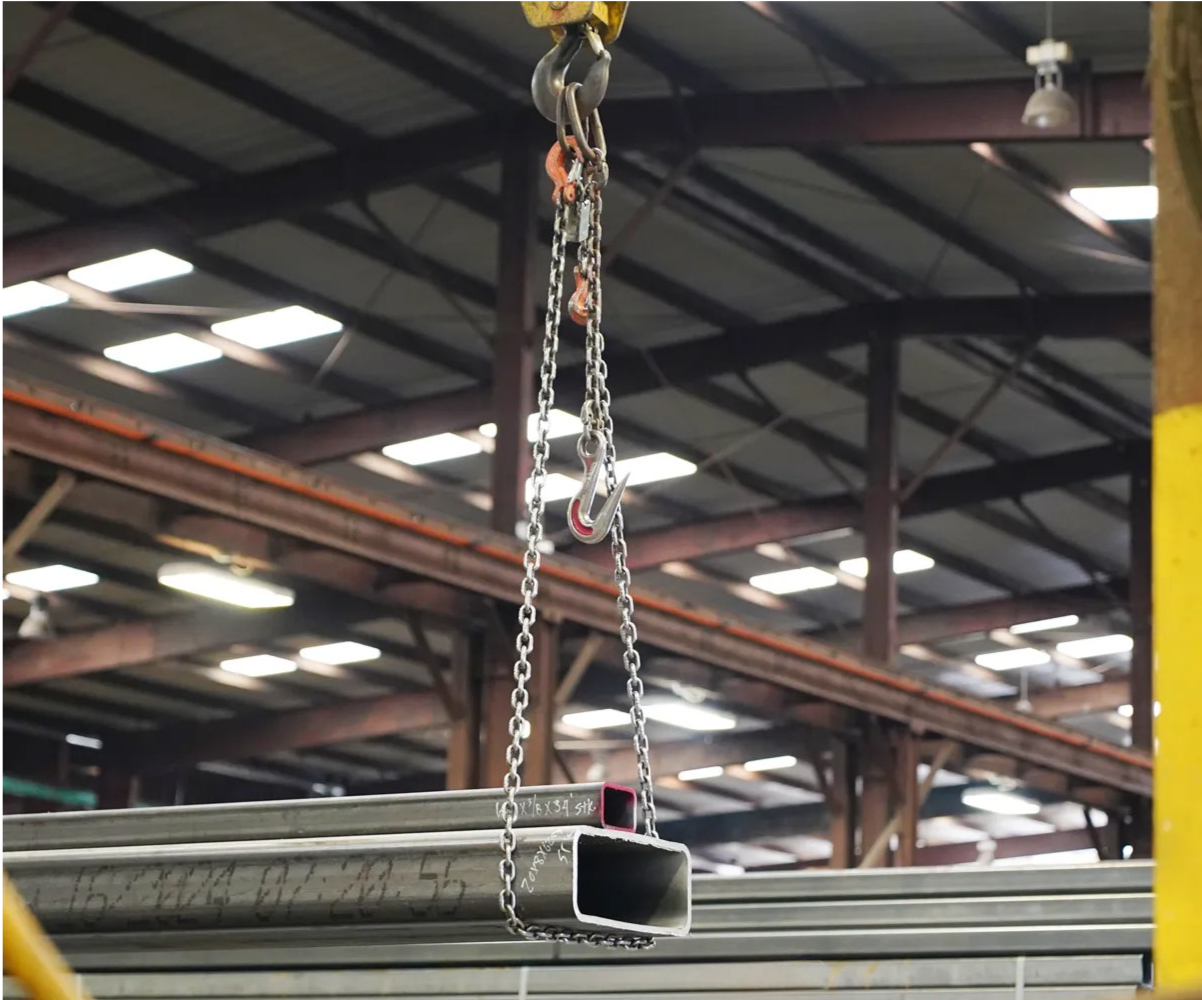
One of the most straightforward applications for chain slings is heavy load lifting. When a load exceeds the capacity of standard synthetic slings or when multiple synthetic slings would be required, a single chain sling often provides a more practical and cost-effective solution. Heavy machinery, large structural components, and industrial equipment frequently fall into this category.
The strength advantage of chain slings becomes particularly valuable in these applications. A Grade 100 chain sling can handle loads that would require multiple synthetic slings or larger diameter wire rope. This consolidation reduces the complexity of rigging operations, decreases the number of attachment points needed, and often improves safety by simplifying the rigging configuration.
Perhaps the most distinctive application for chain slings is handling materials at elevated temperatures. Foundries, steel mills, glass manufacturing facilities, and other heat-intensive industries rely on chain slings for moving hot materials that would be impossible to handle with synthetic slings.
The temperature resistance of chain slings is not merely a convenience—it's often a necessity. Synthetic slings begin to degrade at temperatures well below 400 degrees Fahrenheit, and wire rope can lose strength at elevated temperatures. Chain slings, by contrast, maintain their full working load limit even at extreme temperatures, making them the only practical choice for many hot material applications. A foundry moving hot steel castings, for example, has no viable alternative to chain slings.
Environments with rough surfaces, sharp edges, or abrasive materials present a particular challenge for lifting equipment. Construction sites with concrete and rebar, scrap metal operations, and industrial facilities with rough or jagged materials all present conditions where synthetic slings would quickly deteriorate.
Chain slings, with their hardened steel construction, resist this damage far more effectively. While a synthetic sling might be damaged beyond repair by a single encounter with a sharp edge or rough surface, a chain sling can withstand thousands of similar encounters with minimal degradation. This durability makes chain slings the economical choice for these environments despite their higher initial cost.
Many loads don't fit neatly into standard geometric shapes. Irregular castings, custom fabricated components, and naturally shaped materials all present challenges for rigid lifting solutions. Chain slings, because of their flexibility, can conform to irregular load shapes and distribute pressure more evenly across the load surface.
This flexibility, combined with the availability of multiple leg configurations (single-leg, double-leg, triple-leg, and quad-leg), allows chain slings to be configured for virtually any load shape. The ability to adjust the rigging configuration to match the specific load characteristics often makes chain slings the most practical and safest choice for handling irregular loads.
Single-leg chain slings, as their name suggests, consist of a single chain leg extending from the master link to a hook or attachment point. These slings are used primarily for vertical lifting applications where the load is suspended directly below the lifting point. Single-leg slings are also commonly used for load securing and pulling applications where the load is not being lifted but rather pulled or secured.
The simplicity of single-leg slings makes them versatile and economical. They require only a single attachment point on the load, making them suitable for loads that have limited attachment options. However, single-leg slings are limited to vertical lifting and cannot be used for angled lifts that would create uneven stress on the sling.
Double-leg chain slings consist of two chain legs extending from a master link, allowing the load to be suspended from two points. This configuration enables more balanced load distribution and allows for angled lifts at 60, 45, or 30-degree angles, depending on the specific rigging configuration and load characteristics.
Double-leg slings are ideal for rectangular or regularly shaped loads where two attachment points can be identified. They're commonly used in construction for setting beams, in manufacturing for moving machinery, and in general material handling where balanced load distribution is important. The two-point suspension provides better load stability than single-leg slings and reduces the stress on individual attachment points.
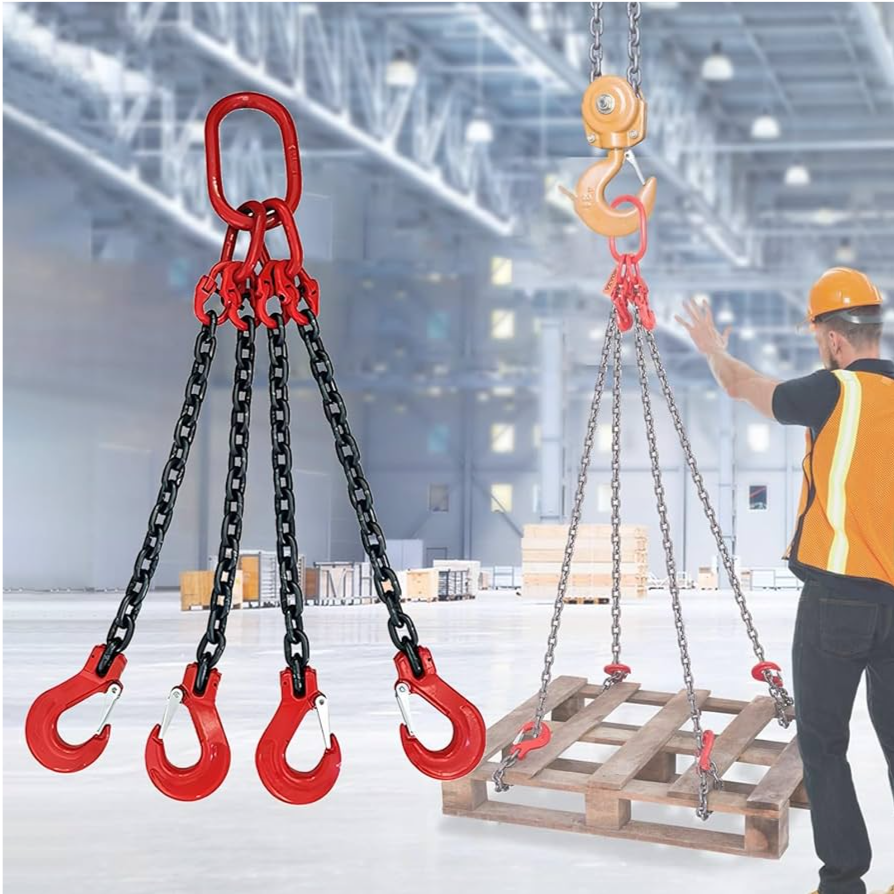
Triple-leg slings with three chain legs and quad-leg (or bridle) slings with four chain legs represent the ultimate in load distribution and stability. These configurations are used for loads that require maximum stability, loads with multiple attachment points, or situations where the load's center of gravity needs to be carefully controlled.
Quad-leg slings, in particular, are often used for extremely heavy loads or loads with irregular weight distribution. By distributing the load across four attachment points, quad-leg slings can handle loads that would be problematic with fewer legs. These slings are common in heavy industry, large-scale construction, and any application where maximum stability and load control are essential.
Adjustable chain slings feature shortening components that allow the length of the chain legs to be modified without affecting the working load limit. This flexibility makes adjustable slings ideal for operations that handle loads of varying sizes or shapes. A single adjustable sling can often replace multiple fixed-length slings, reducing inventory requirements and improving operational flexibility.
Adjustable slings are particularly valuable in construction, where loads vary significantly from project to project, and in manufacturing, where product designs change. The ability to adjust a sling to fit different load configurations without sacrificing safety or capacity makes adjustable slings a cost-effective solution for many operations.
Synthetic slings, typically made from nylon or polyester, offer advantages in certain applications: they're lighter, less likely to damage load surfaces, and more comfortable to handle. However, chain slings outperform synthetic slings in several critical areas.
For heavy loads, chain slings provide superior strength. For hot materials, chain slings are the only practical choice. For abrasive environments, chain slings resist damage far more effectively. For applications requiring extreme durability and long service life, chain slings typically outlast synthetic alternatives by years or decades. When these factors are important to your application, chain slings are the clear choice despite their higher initial cost.
Wire rope slings offer excellent strength and are suitable for many heavy lifting applications. However, chain slings offer advantages in specific scenarios. Chain slings are more flexible and can conform to irregular load shapes more effectively than wire rope. Chain slings are also easier to inspect visually—damage to individual links is immediately apparent, whereas wire rope damage can be hidden within the rope structure. For applications involving rough surfaces or irregular loads, chain slings often provide better performance and safer operation than wire rope.
While chain slings are versatile and durable, they're not always the optimal choice. For applications involving delicate loads where surface protection is paramount, synthetic slings might be preferable. For applications requiring extreme flexibility or where weight is a critical factor, other sling types might be more suitable. The key is understanding your specific application requirements and selecting the sling type that best matches those requirements.
Selecting the appropriate chain sling begins with thoroughly understanding your load. What is the weight? What is the shape? Are there sharp edges or rough surfaces? Will the load be hot? How frequently will the sling be used? The answers to these questions determine which chain sling configuration and capacity you need.
A load that's 5,000 pounds and regularly shaped might be handled effectively by a standard double-leg chain sling. A load that's 50,000 pounds and irregularly shaped might require a quad-leg sling. A load that's hot might require a specific type of chain sling designed for high-temperature applications. Understanding these load characteristics is the foundation of proper sling selection.
The environment where the sling will be used significantly impacts sling selection. A sling used in a clean, controlled manufacturing environment has different requirements than a sling used on a construction site exposed to weather and rough handling. Corrosive environments like marine operations require slings with appropriate corrosion-resistant coatings. Hot environments require slings rated for the expected temperatures.
Environmental assessment should also consider how frequently the sling will be used. A sling used multiple times daily faces more stress and wear than a sling used occasionally. This usage frequency should influence both the sling capacity you select and the inspection and maintenance schedule you establish.
Proper sling selection requires calculating the working load limit (WLL) needed for your application and then selecting a sling with appropriate capacity. This calculation must account for the angle of the lift—a sling used at a 30-degree angle carries more stress than the same sling used at a 60-degree angle.
Always select a sling with capacity greater than your calculated requirement. Industry standards typically recommend a safety factor of at least 4:1, meaning the sling's working load limit should be at least four times the maximum load you'll be lifting. This safety factor provides protection against unexpected load variations, dynamic loading, and other factors that might increase stress beyond the static load calculation.
Using chain slings correctly is as important as selecting the right sling. Proper rigging begins with ensuring that attachment points on the load are strong enough to handle the forces involved. The attachment points should be positioned to create balanced load distribution and avoid creating stress concentrations.
Avoid twisting or knotting chain legs, as this creates stress concentrations that can significantly reduce the sling's effective capacity. Ensure that the load is properly centered and balanced before lifting. Use appropriate spreader bars or other rigging equipment to maintain proper angles and load distribution when necessary.
While chain slings are resistant to damage, protecting both the sling and the load during operations is still important. Use edge protectors or padding where chain slings contact sharp edges or corners on the load. This protection prevents damage to the load's finish and reduces stress on the sling.
Similarly, protect the sling from contact with sharp edges on the lifting equipment or surrounding structures. A small nick or cut from a sharp edge might seem insignificant but can create a stress concentration that compromises the sling's integrity.
Regular inspection and maintenance extend the life of chain slings and ensure they remain safe to use. Before each use, perform a visual inspection looking for obvious damage, deformities, or signs of wear. Periodically, perform more thorough inspections including link-by-link examination and measurement of chain elongation.
Keep chain slings clean and free from oil and dirt that can hide damage. Store slings in a dry location protected from weather and corrosive environments. Replace individual links or components as needed to maintain the sling in good condition. With proper care, a quality chain sling can provide decades of reliable service.
Chain slings typically cost more initially than synthetic slings but often provide superior long-term value. A chain sling that remains in service for 20 years provides far better value than multiple synthetic slings that require replacement every few years. When you calculate the total cost of ownership—including replacement costs, downtime for sling changes, and the cost of inventory management—chain slings often emerge as the most economical choice for many applications.
Using the right sling for your application improves operational efficiency. A chain sling that can handle your load safely and reliably reduces the risk of equipment failure and the associated downtime. Avoiding sling failures and the disruptions they cause provides significant value beyond the direct cost of the sling itself.
Using appropriate equipment for your application reduces the risk of accidents and the associated liability. A chain sling selected and used correctly for your specific application provides better safety than an undersized or inappropriate sling. The liability protection and reduced insurance costs associated with proper equipment selection provide additional financial justification for choosing chain slings when they're the appropriate choice.
Chain slings are used for a remarkably diverse range of applications, from heavy construction lifting to hot material handling in foundries, from marine cargo operations to precision aerospace manufacturing. Their unique combination of strength, temperature resistance, durability, and flexibility makes them the optimal choice for many lifting scenarios where other sling types fall short.
Understanding what chain slings are used for—and more importantly, why they're chosen for specific applications—empowers you to make better decisions about your lifting and rigging equipment. Whether you're managing a construction project, operating a manufacturing facility, or coordinating any industrial operation involving lifting, chain slings likely play an important role in your operations.
Ready to optimize your lifting operations with the right chain slings? Our team at lifting-chain.com specializes in helping operations like yours select, deploy, and maintain chain slings that match your specific application requirements. We can help you:
<!--[if !supportLists]-->• <!--[endif]-->Assess your current lifting operations and identify opportunities for improvement
<!--[if !supportLists]-->• <!--[endif]-->Select the right chain sling configuration and capacity for each of your applications
<!--[if !supportLists]-->• <!--[endif]-->Implement proper rigging procedures and safety protocols
<!--[if !supportLists]-->• <!--[endif]-->Establish maintenance and inspection schedules that maximize sling life
<!--[if !supportLists]-->• <!--[endif]-->Train your personnel on proper chain sling selection and use
<!--[if !supportLists]-->• <!--[endif]-->Source high-quality chain slings from trusted manufacturers