X
Our staff will contact you within 12 hours, You can also contact us through the following ways:
Contact US WhatsApp: +86 18263873187
- Email: [email protected]
- Tel: +86 18263873187
- Web: www.lifting-chain.com


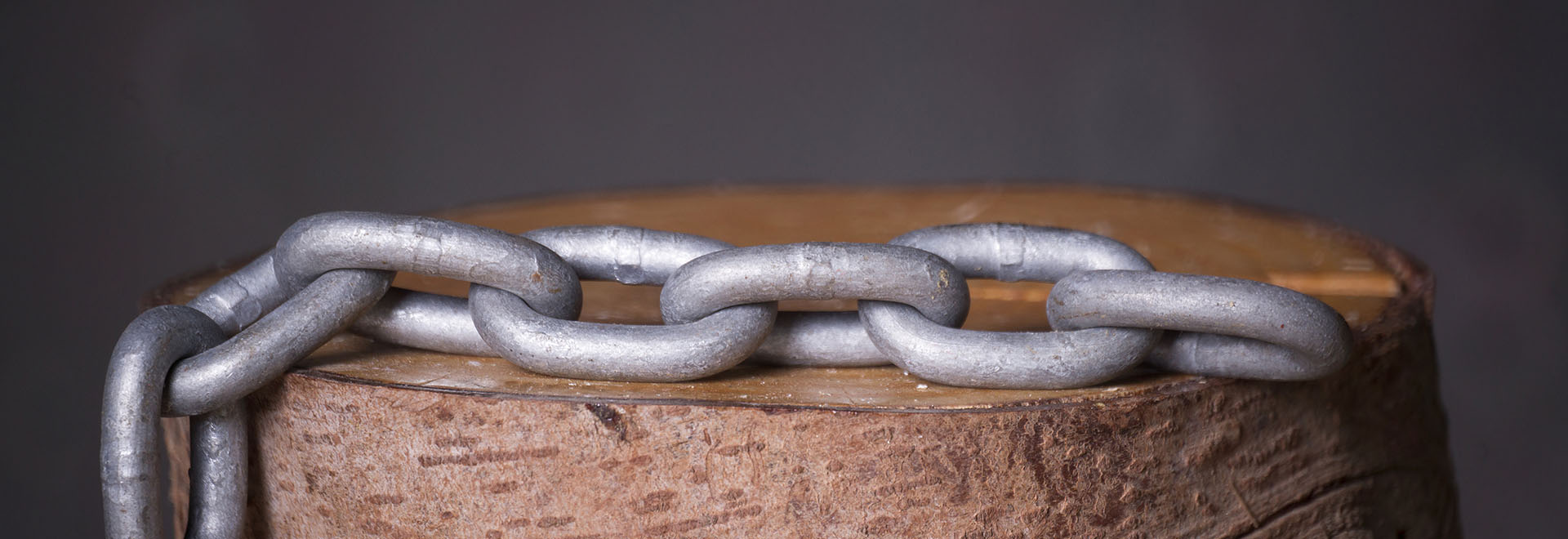
An alloy chain is one of the most critical components in industrial lifting, rigging, and hoisting systems. To ensure reliability and compliance, buyers must understand the technical specifications that define chain performance—such as grade, diameter, working load limit, and heat treatment quality.
This guide provides an in-depth look at alloy chain specifications, as well as a practical buying guide to help users choose the right alloy chain or alloy chain sling for heavy-duty operations.
Industrial alloy chains follow internationally recognized standards including EN 818, ISO, CE, NACM, and TÜV. Below are the core technical specifications that determine performance.
Standard lifting-grade alloy chain
High strength with strong resistance to wear
Suitable for most construction, mining, and manufacturing tasks
Approximately 25% higher WLL versus G80
Reduces total sling weight
Preferred in offshore, steel production, and heavy industrial lifting
High-grade alloy steel undergoes quenching + tempering to achieve superior tensile strength and fatigue resistance.
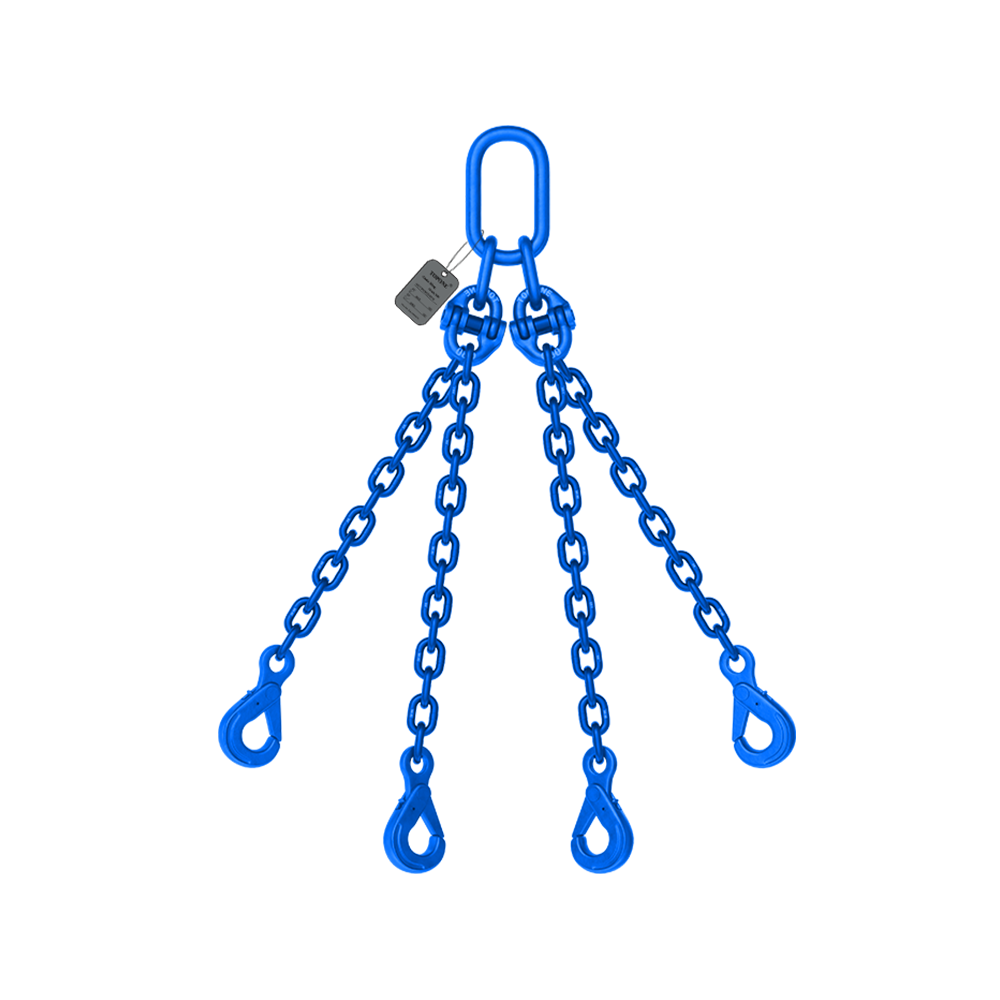
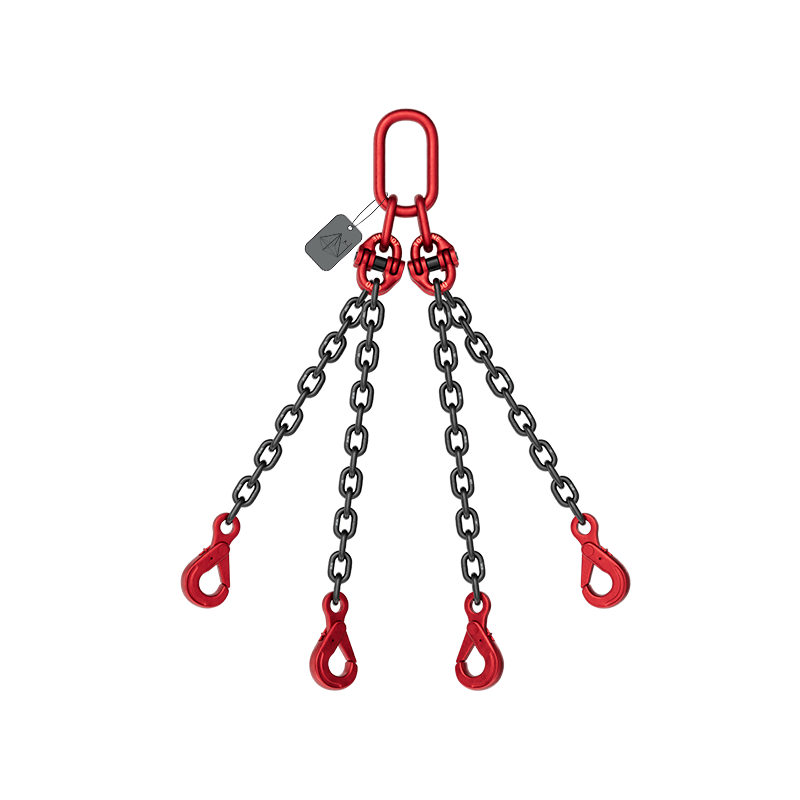
Chain diameter directly affects allowable load capacity.
Larger diameters → higher WLL → heavier lifting applications.
Example (typical values based on EN 818):
Diameter | G80 WLL (t) | G100 WLL (t) |
6 mm | 1.12 t | 1.40 t |
8 mm | 2.00 t | 2.50 t |
10 mm | 3.15 t | 4.00 t |
13 mm | 5.30 t | 6.70 t |
16 mm | 8.00 t | 10.00 t |
Understanding these values helps ensure compliance and correct sizing of alloy sling chain and multi-leg chain slings.
A high-performance alloy chain must undergo:
Quenching → increases hardness
Tempering → balances strength and ductility
Calibration → ensures uniform link dimensions
Proof load testing → verifies lifting capability
Heat treatment quality directly impacts fatigue resistance and lifespan.
Depending on application, alloy chains are available with:
Black lacquer finish
Powder coating
Hot-dip galvanizing
Special anti-corrosion coatings
Stainless alloy chain (marine grade)
Surface finish affects not only durability but also operational safety.
Every alloy chain must maintain precise link dimensions:
Inside width
Outside width
Pitch length
Weld seam integrity
Straightness and link alignment
Consistency ensures smooth assembly into alloy chain slings and compatibility with hooks, master links, and connectors.
Choosing the correct alloy chain is essential for safe, efficient lifting. This guide helps buyers avoid mismatched chain specifications and select the highest-performing product for their application.
Always choose an alloy chain with a WLL equal to or greater than the maximum anticipated lifting load.
Consider additional forces from:
Sling angle
Dynamic movement
Uneven load distribution
Higher WLL = safer lifting operation.
Use G80 for general industrial tasks.
Choose G100 for high-capacity, high-efficiency lifting.
For offshore or mining operations, G100 is typically preferred due to lighter weight and higher strength.
Examples:
8–10 mm → Medium-duty lifting
13–16 mm → Heavy-duty engineering & machinery lifting
18–22 mm → Extremely heavy industrial loads
Diameter affects both capacity and compatibility with hooks and master links.
Only purchase alloy chain that includes:
CE or TÜV certification
EN 818 compliance
Batch/heat number
Manufacturer identification
Test documentation
This ensures legal compliance and operational safety.
If used in harsh environments, choose:
Galvanized alloy chain → marine or outdoor settings
Stainless alloy chain → chemical plants or corrosion-prone areas
Heat-resistant alloy chain → steel mills, foundries
Matching chain type to environment extends service life significantly.
For multi-leg sling systems, ensure your alloy chain matches:
Hook type
Master link size
Shortening clutch compatibility
Sling angle requirements
Assembly specifications
A mismatched alloy chain can compromise the entire sling system.
A premium alloy chain ensures:
Longer service life
Higher fatigue resistance
Better lifting stability
Improved safety margins
Lower long-term operating cost
Since alloy chain is the load-bearing backbone of every chain sling, choosing the right chain directly affects overall lifting performance.
TOPONE CHAIN® produces industry-certified alloy chain for global heavy-lifting applications. Our advantages include:
G80 & G100 alloy chain manufacturing
Advanced heat-treatment and calibration lines
Precision dimensional control
Full traceability & CE/TÜV/ISO certification
OEM/ODM sling chain production
Compatibility with all alloy chain slings
Our alloy chain is the foundation of all TOPONE CHAIN® alloy sling and chain assemblies.
Understanding alloy chain technical specifications and selecting the right product is essential for safe heavy-lifting operations.
From material grade and WLL to diameter, treatment, and environmental suitability, each factor contributes to the performance of alloy chain slings, alloy sling and chain, and complete chain sling systems.
For globally certified alloy chains engineered for industrial lifting, TOPONE CHAIN® remains a trusted, high-quality manufacturer.